
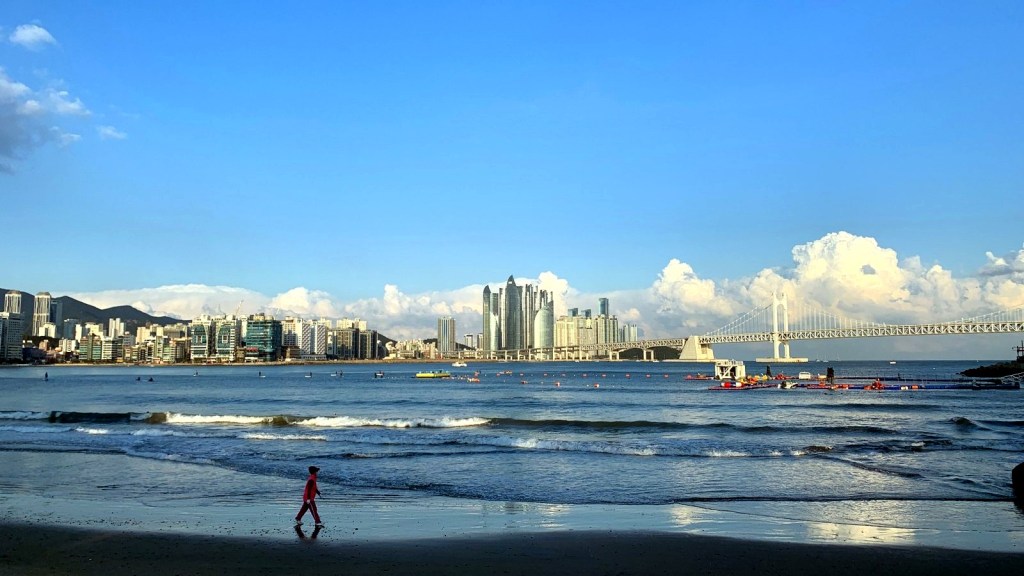
For most visitors, Gwangalli Beach (광안리해수욕장, Gwangalli Haesuyokjang) is one of Busan’s best-known beaches.
There is Gwangan Bridge across the water, the lights at night, and a long stretch of restaurants, bars, and cafés along the coast.
For me, it was a little different.
I lived near Gwangan Station for about two years, in a residential part of the neighborhood rather than right on the beachfront.
So Gwangalli was never somewhere I had to make plans to visit. It was somewhere I could walk toward after dinner.
A bridge that people travel to Busan to photograph eventually became part of an ordinary evening view.
That is why, if you are visiting Gwangalli for the first time, I would not stop at the bridge photo. Stay a little longer.
Gwangalli Is Worth More Than a Quick Stop at the Beach
The tourist side of Gwangalli is easy to find: the beach, Gwangan Bridge, restaurants, bars, and cafés.
But head inland toward Gwangan Station, or into the streets stretching toward Suyeong and Namcheon, and the atmosphere changes.
You start seeing apartment buildings, homes, small restaurants, local shops, and the ordinary streets where people actually live.
That is part of what makes Gwangalli interesting. The tourist area and the residential neighborhood are not really separate.
So instead of coming only for the night view, I recommend giving Gwangalli a few hours from afternoon into evening.
If You Like Bread, Start Earlier
The Gwangalli and Namcheon area is also well known among bakery lovers.
Namcheon-dong even picked up the nickname Ppangcheon-dong (빵천동), a wordplay using ppang (빵, bread). Korea’s official tourism site describes the area as a bakery destination that attracts visitors specifically for its bread and recommends combining it with nearby Gwangalli Beach.
It is not simply one giant bakery street. Across the wider Suyeong, Gwangalli, and Namcheon area, bakeries and small cafés are scattered through the neighborhood.
So if you enjoy bread or coffee, there is no need to head straight to the beach. Come a little earlier, walk through the side streets, stop at a bakery or small café that catches your attention, and then make your way toward the sea.
You do not have to chase one famous shop. Part of the fun is seeing the neighborhood along the way.
See Gwangalli Before Sunset Too
I also recommend seeing the beach while there is still daylight.
During the day, the sea and the beach itself stand out more than the bridge lights.
Then have dinner and come back outside. As the sky gets darker, Gwangan Bridge begins to dominate the view, and the same beach gradually turns into the Gwangalli most people recognize from night photos.
I prefer seeing that change rather than arriving only after dark.
Gwangalli Is Not Just About Seafood
Because Busan is a coastal city, foreign visitors often associate neighborhoods like Gwangalli with raw fish and seafood.
There is plenty of both. But that is far from your only choice.
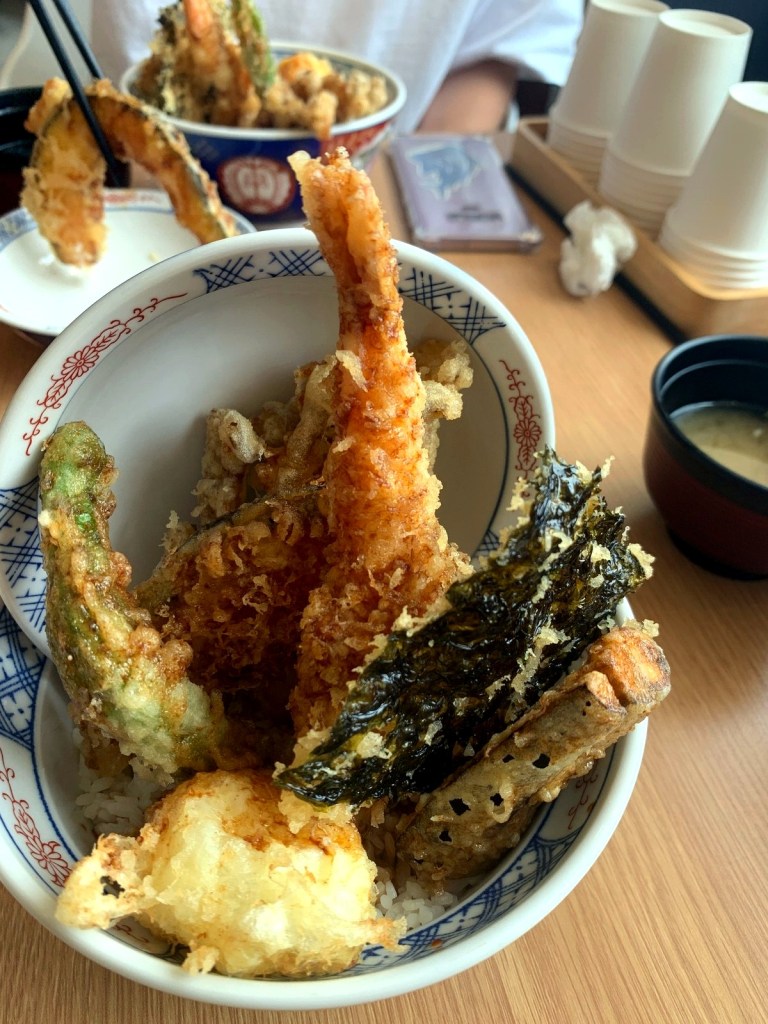
You can find Korean food, Japanese food, Western food, and a wide range of international cuisines throughout the area. The tendon in the photo above is one example.
You do not need to turn every meal in Gwangalli into a seafood meal.
That said, if someone asked me what they should try while visiting Busan, Korean pork-and-rice soup (돼지국밥, dwaeji-gukbap) would be high on my list.
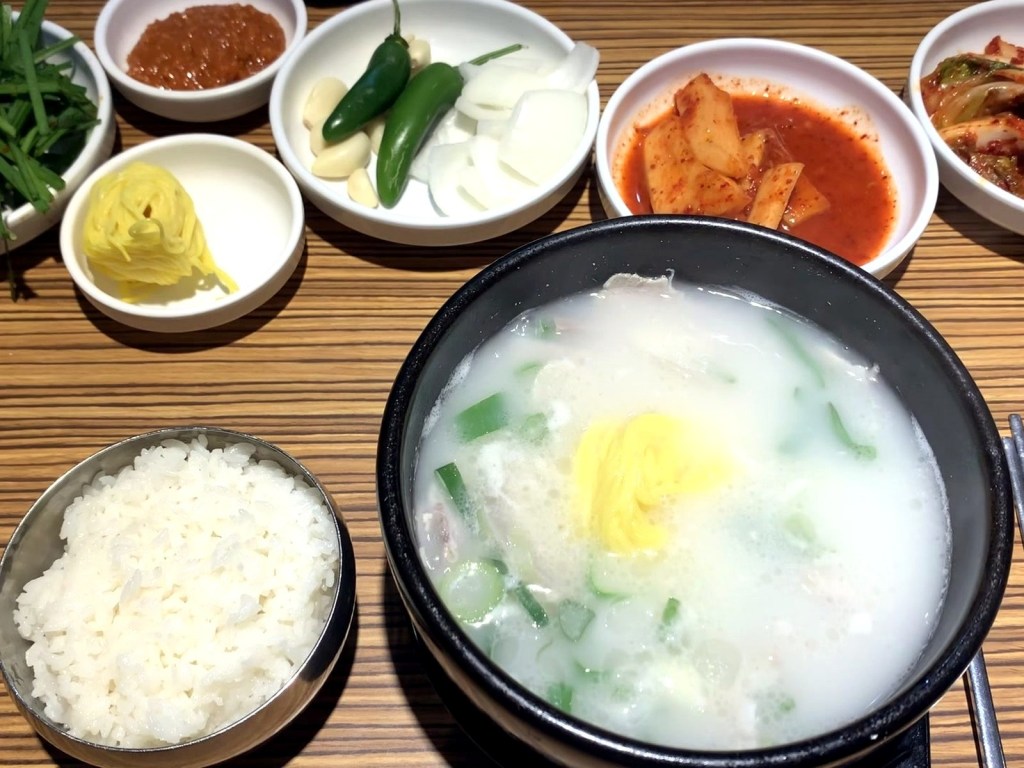
It is not a Gwangalli-specific dish, but for a first visit to Busan, I think it is worth trying at least once.
If you prefer beef, Eonyang-style grilled beef (언양불고기, Eonyang bulgogi) is another regional option worth knowing about.
For Raw Fish, I Would Not Automatically Start With a Big Seafood Center
This is a personal preference, not a rule.
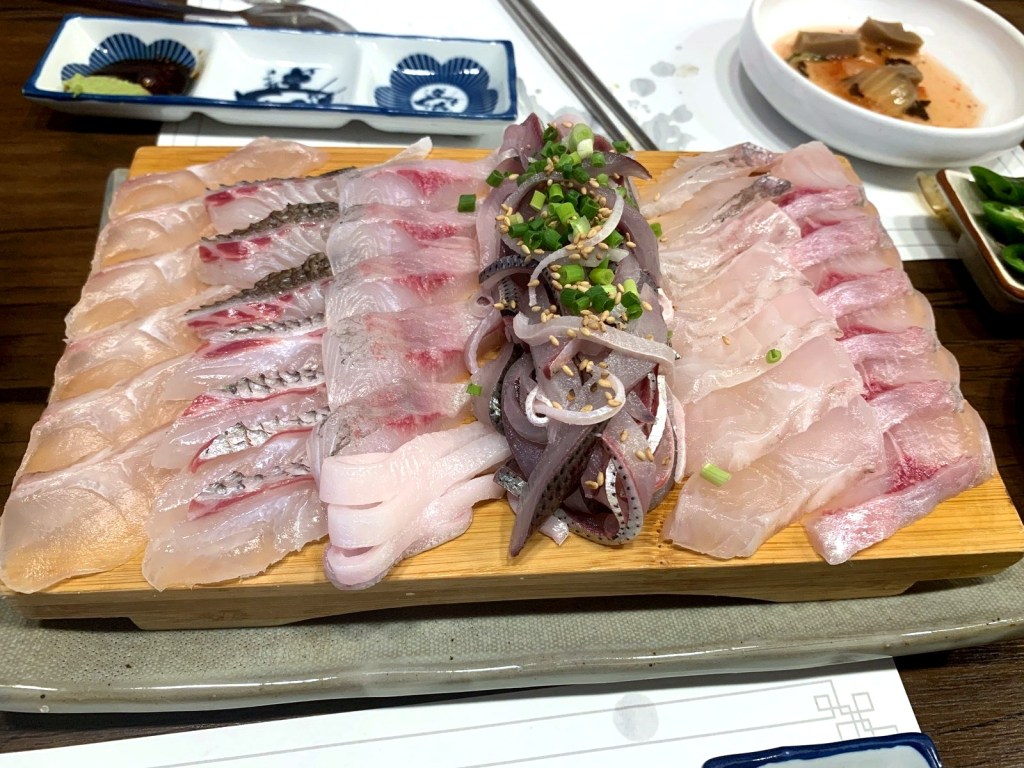
If I wanted Korean-style raw fish (회, hoe) around Gwangalli, I would usually look at smaller neighborhood seafood restaurants or places serving set meals and courses before automatically heading to a large tourist seafood center.
For a foreign traveler, that can actually make the meal easier. Prices may be easier to understand, and there can be less uncertainty about how much to order.
A course-style meal also simplifies the whole process because the dishes arrive in sequence.
From my experience, a small local seafood restaurant can give you a clean and satisfying meal without turning dinner into a major tourist operation.
That does not mean every large seafood center is bad. It simply means that eating raw fish in Gwangalli does not require going to the biggest or most famous one.
Gwangalli at Night Is About the Sea
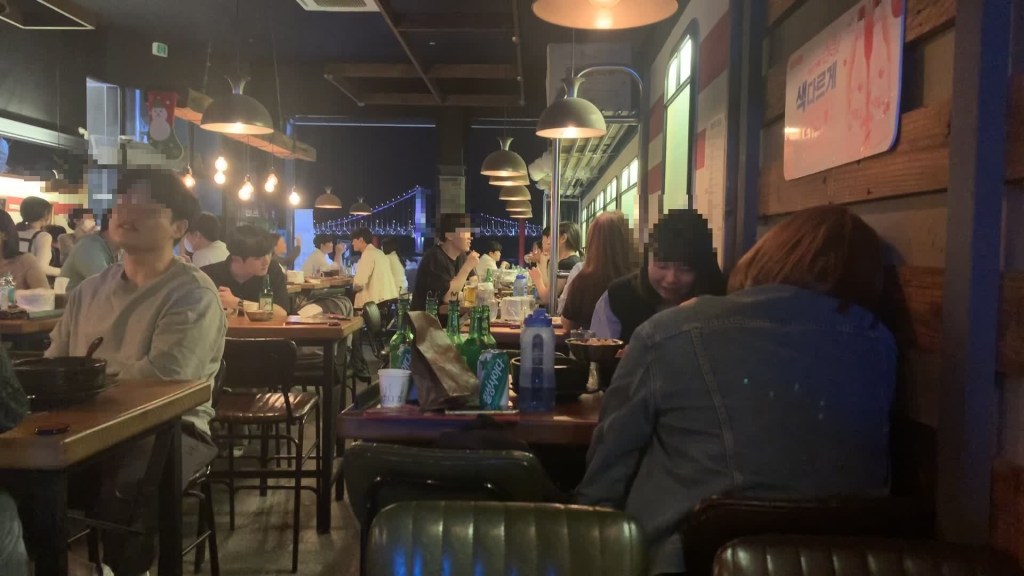
After dinner, head back toward the beach.
Once Gwangan Bridge is fully lit, Gwangalli settles into its nighttime atmosphere. You can have a drink, walk along the water again, or simply sit somewhere with the bridge in view.
But if someone asked me where to go for more concentrated nightlife in Busan, I would not automatically send them to Gwangalli.
For that, Seomyeon (서면, Seomyeon) is a different experience.
In Gwangalli, the sea is part of the night.
In Seomyeon, the nightlife itself is the main event.
Visiting on Saturday? Check the Drone Show
The Gwangalli M Drone Light Show runs every Saturday throughout the year.
As of September 2026, the official schedule is 8:00 p.m. and 10:00 p.m. from March through September, and 7:00 p.m. and 9:00 p.m. from October through February.
Each performance lasts about 12 minutes and is free. Weather, communication problems, or technical conditions can cause a delay or cancellation, so check the official Busan schedule on the day you visit.
I would not rebuild an entire Busan itinerary around the drone show. But if you are already spending Saturday evening in Gwangalli, it fits naturally into the night.
Coming for the Busan Fireworks Festival? You Do Not Need to Stay in Gwangalli
One of the times when Gwangalli felt completely different while I lived nearby was the Busan Fireworks Festival.
A normal busy weekend does not really compare. Huge crowds arrive, and the beach and Gwangan Bridge become one enormous event venue.
The 21st Busan Fireworks Festival is scheduled for November 7, 2026. Official paid seating is already on sale, with R seats priced at KRW 100,000 and S seats at KRW 70,000. You can check the official Busan announcement for current details.
If you love fireworks, it can absolutely be worth planning a Busan trip around the festival.
But here is one practical tip:
You do not need to stay in Gwangalli just because you are coming for the fireworks.
Accommodation prices around Gwangalli have jumped sharply during past festival dates. In 2022, Yonhap reported Gwangalli-area shared accommodations listed at roughly KRW 500,000 to KRW 1.4 million for the festival night, with some bridge-view rooms around KRW 700,000 to KRW 1.2 million.
Restaurants with a clear view of Gwangan Bridge have also charged large premiums for window, terrace, or rooftop seating.
In one widely reported 2023 case, a restaurant charged KRW 1 million for a five-person table and KRW 1.2 million for an eight-person table just for the seats. Food was extra. The report described criticism of those seat charges even among local business owners.
That is why, on fireworks day, restaurants inside the neighborhood can become much more attractive.
You can eat away from the beachfront, then walk out to watch the fireworks instead of paying a huge premium simply for the view from your table.
The same logic applies to accommodation. I would consider staying somewhere else with convenient subway access and traveling into Gwangalli for the event.
Past Busan Fireworks Festivals have involved major road controls around Gwangalli and Gwangan Bridge, so I would choose the subway over driving. The detailed 2026 traffic plan will be announced closer to the event, and the subway will still be extremely crowded, so allow extra time.
If I were visiting, my plan would be simple:
Stay elsewhere → take the subway to Gwangalli → eat in the neighborhood → watch the fireworks by the beach → take the subway back.
You need to be in Gwangalli to see the fireworks. You do not need to pay the highest possible “view premium” for your hotel and dinner too.
How I Would Spend an Afternoon and Evening in Gwangalli
You do not need a long checklist of attractions here.
Bakery or small café → neighborhood streets → beach before sunset → dinner → Gwangan Bridge at night → a drink.
If it is Saturday, add the drone show.
And if a famous restaurant has a very long queue, you do not always have to wait. For a traveler spending only a few days in Busan, time is part of the cost of travel too.
Gwangalli works better when you spend a few hours watching the neighborhood change from afternoon into night rather than rushing through it as another stop on a checklist.
What Tourists Miss Beyond the Bridge Is the Neighborhood
When people first arrive in Gwangalli, Gwangan Bridge naturally gets most of the attention.
But after living nearby for about two years, what I remember most is everything around it.
The bakeries and small cafés in the side streets. The residential blocks behind the beach. The sea before sunset. The same waterfront looking completely different after dinner.
Gwangalli’s appeal is not only the bridge.
Beyond that famous night view is a neighborhood where people actually live.
So see Gwangan Bridge. Take the photo. But do not leave immediately.
Walk a little farther and stay a little longer.
That is the Gwangalli tourists can easily miss beyond the bridge.
Have a question about Gwangalli, Busan, or traveling in Korea? Leave a comment below. If I know the answer, I’ll be happy to help when I can.


Leave a comment