
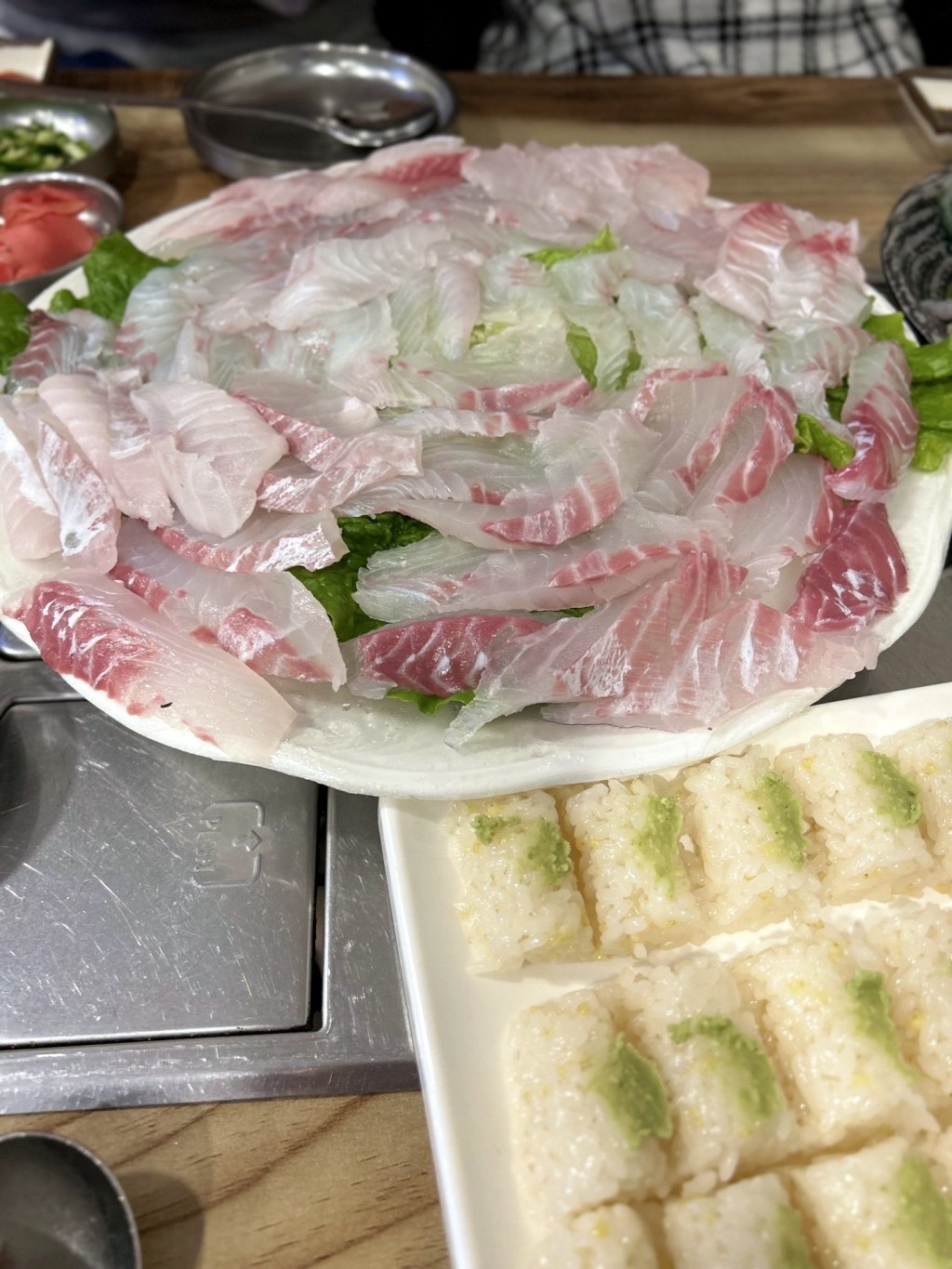
Jeju is one of the places in Korea where a seafood meal can easily become the main event of the evening.
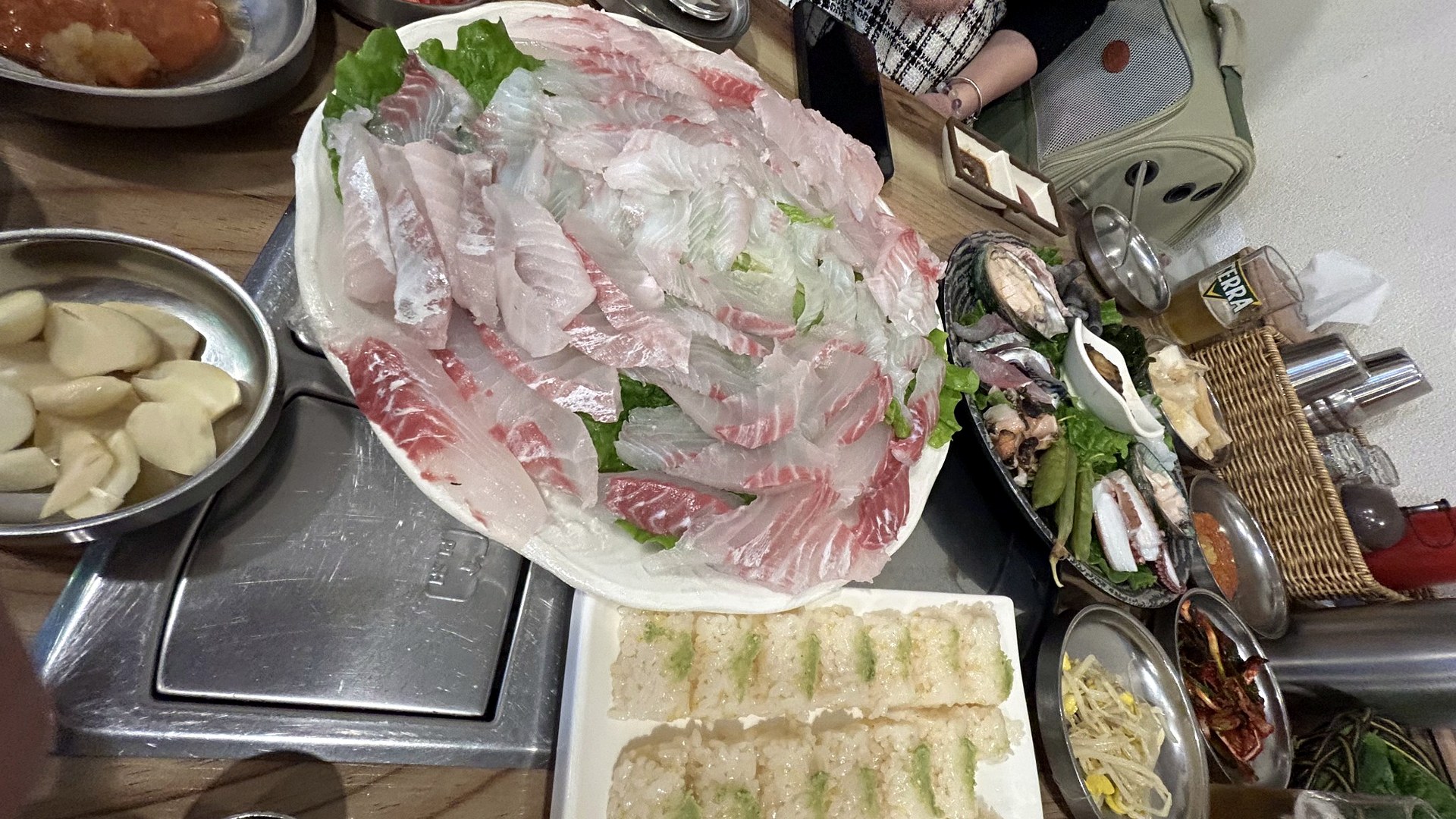
One of the most memorable meals I had there was built around dagumbari (다금바리, dagumbari), a fish treated in Korea as one of the premium choices for sashimi.
I did not go to a place because it was famous online. I deliberately looked for a restaurant local people used, because that is often the kind of meal I enjoy more.
And once we sat down, it was not just “a plate of raw fish.”
A Korean Sashimi Meal Is Usually More Than the Main Fish
A Korean sashimi restaurant (횟집, hoe-jip) often serves the meal as a sequence of dishes rather than dropping the main sashimi on the table and stopping there.
At this Jeju meal, the table filled up with seafood before and around the dagumbari itself.
There was abalone (전복, jeonbok), octopus (문어, muneo), and other seafood alongside the main fish.
In many Korean sashimi restaurants, this first spread also gives everyone something to eat with drinks while waiting for the main fish — food served with alcohol (안주, anju).
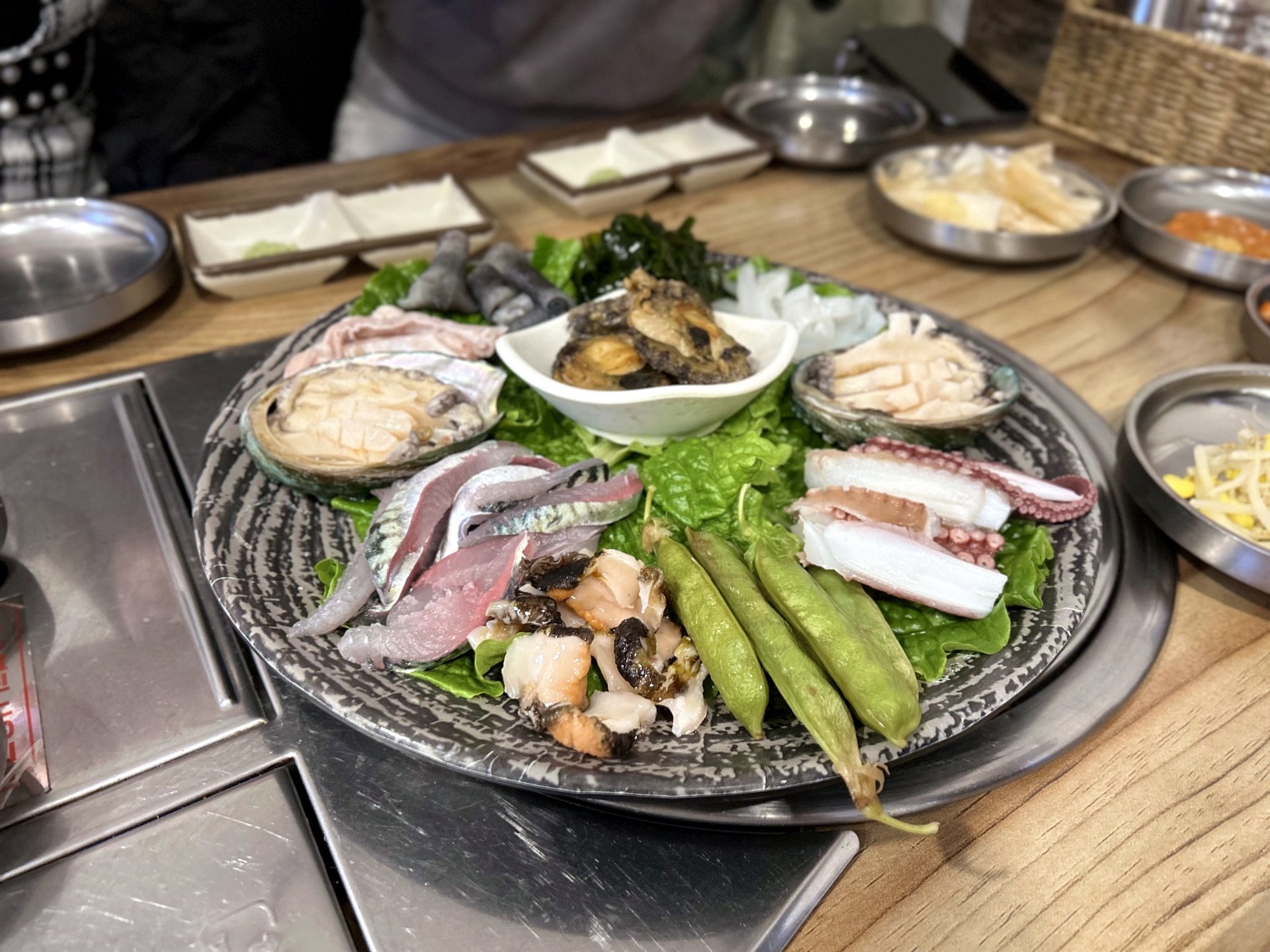
That is one reason I think first-time visitors sometimes misunderstand Korean sashimi restaurants. The expensive fish matters, but the whole table is part of the experience.
How I Eat Dagumbari at the Table
With good sashimi, I usually start simply.
A little soy sauce. Maybe some wasabi. Then I taste the fish before adding too much else.
After that, I might use sweet, sour and spicy red dipping sauce (초고추장, cho-gochujang), garlic, chili, or wrap the fish with vegetables.
If you are not familiar with Korean wraps, I have a separate guide to ssam (쌈, ssam) and how Koreans combine meat, seafood, vegetables and sauces in one bite.
There is no single correct combination. The point is that the meal lets you change the flavor from bite to bite.
The Last Pot Can Be as Important as the Sashimi
This is one of my personal preferences, and it is the part I would recommend trying if the restaurant can do it.
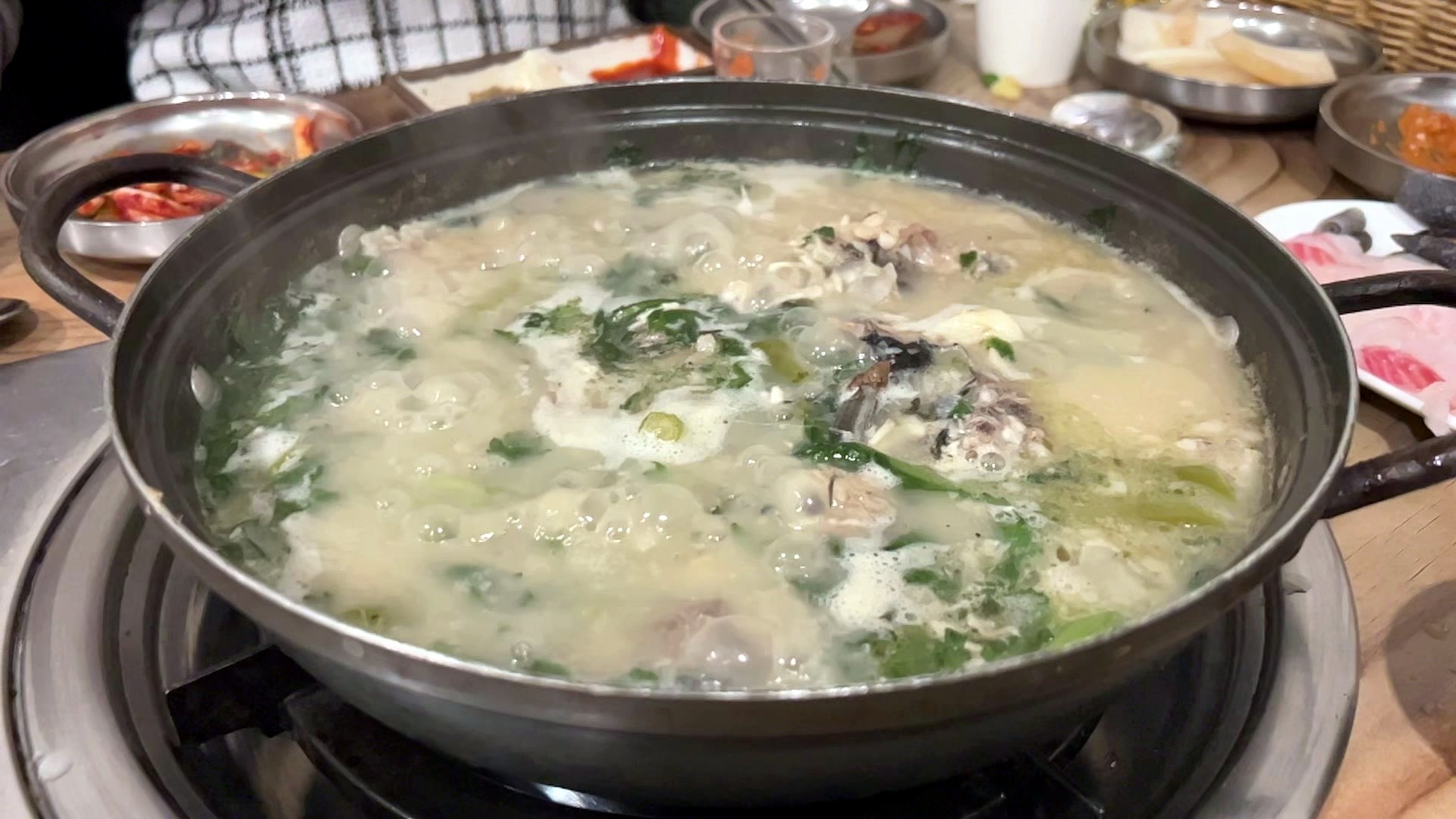
After the sashimi is finished, the remaining fish bones and head can be used for soup.
Many people immediately think of a spicy fish stew. I prefer the opposite.
I like a clear fish soup (지리, jiri) with as little seasoning as possible.
My preferred way is to let it simmer for around 30 minutes without adding a heavy seasoning paste, then adjust the final taste with only a little salt.
When the fish itself is good, a long, gentle simmer can pull plenty of flavor into the broth without covering it with spice.
For me, that clear soup can be the best ending to an expensive sashimi meal.
What About Live Octopus?
Live octopus (산낙지, sannakji) is another seafood experience many foreign visitors associate with Korea.
I wrote separately about how Koreans actually eat sannakji, including why it is usually shared at the table and why you need to chew it thoroughly.
That story came from another seafood meal, not this Jeju dagumbari table, but it helps explain the wider Korean way of eating seafood with drinks and several shared dishes.
Why I Remember This Meal
Dagumbari is expensive enough that I would never describe it as an everyday Korean meal.
But the part I remember is not just that I ate a premium fish in Jeju.
I remember the table filling up, everyone sharing different seafood, changing sauces and wraps, and then slowing the meal down again with a clear pot of soup at the end.
That rhythm is much closer to what a good Korean sashimi dinner feels like to me than simply saying, “I ate raw fish.”
If you want the exact restaurant I visited, leave a comment. If I can confirm the Google Maps location, I’ll share it.
Next, I’ll leave the table and head to a Jeju golf course, where the biggest surprises were not the scenery but the wind and something golfers call the Hallasan break.
Have a question about Korean seafood or eating in Jeju? Leave a comment below. If I know the answer, I’ll be happy to help when I have time.


Leave a comment