
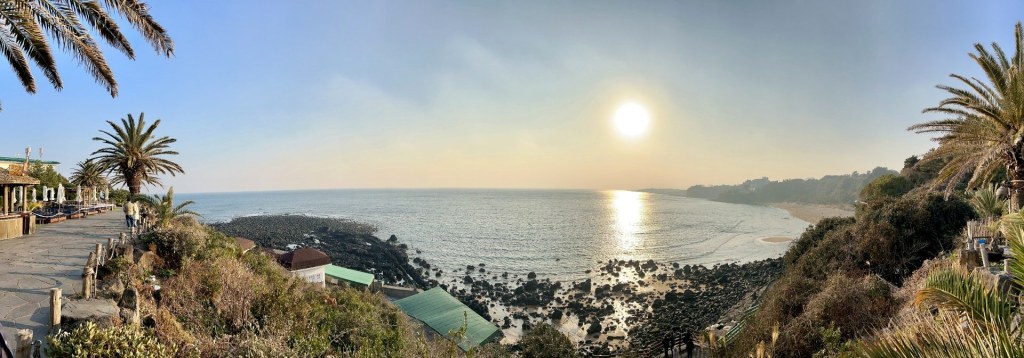
Some of the Jeju photos I remember most clearly were not taken at places I had planned to visit.
They were taken between places.
I would be driving, see the sea through the windshield, notice a stretch of black volcanic rock or an empty road, and think, “That looks good.”
So I stopped.
Not Every Good Jeju Stop Has a Famous Name
Travel guides naturally focus on places with names.
That makes sense. You need something you can search on a map.
But Jeju does not always work that way for me.
Sometimes the best part of the day is a piece of coastline you were only supposed to drive past.
There may be dark basalt rocks, a small road, wind coming off the water, and nobody around making the place feel important.
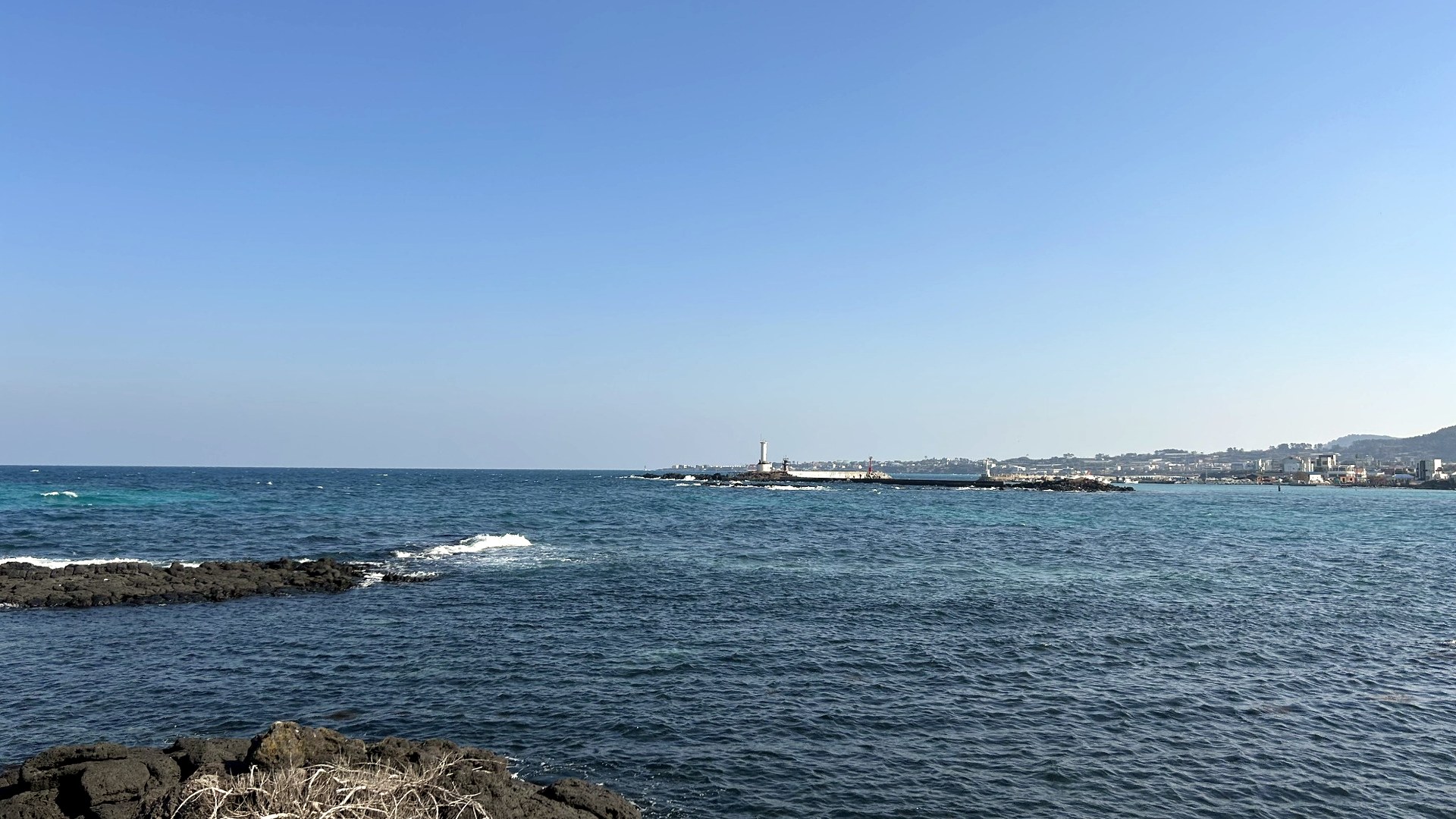
It is not a “must-see attraction.”
It is just Jeju.
Driving Changes the Way You Notice the Island
This is one reason I like traveling around Jeju by car.
A bus gets you from one stop to another. A car lets you change your mind.
If the weather suddenly looks good in one direction, you can go that way.
If a view catches your eye, you can stop somewhere appropriate and spend ten minutes there instead of driving straight to the next item on a schedule.
That freedom sounds small until you actually use it.
The Places Between the Destinations Became Part of the Trip
On this trip, I visited places with names everyone can search: beaches, coastal roads, Sanbangsan, a temple.
Those places mattered.
But when I looked back at the day, I also remembered the road itself.
I remembered stopping because the sea looked good. I remembered stretches of volcanic coast that were not the reason I had left in the morning. I remembered ordinary scenery that became memorable only because I had enough freedom to notice it.
That is difficult to put on a checklist.
This Is the Jeju I Would Tell a Friend Not to Rush Through
If you only have two days, of course you need a plan.
But if your schedule has room, do not make every hour a race between famous places.
Leave some space for the island to interrupt your itinerary.
That does not mean driving randomly all day.
It means understanding that in Jeju, the road between two destinations can sometimes become the thing you remember.
My first article in this series followed an actual west-coast route. This one is the opposite.
It is about the places that never made it onto the route at all.
Next, I’ll put the whole idea together in a practical self-drive guide: when I would rent a car, when I would bring my own, and why flexibility matters so much in Jeju.
Have a question about Jeju or something you saw while traveling in Korea? Leave a comment below. If I know the answer, I’ll be happy to help when I have time.


Leave a comment