
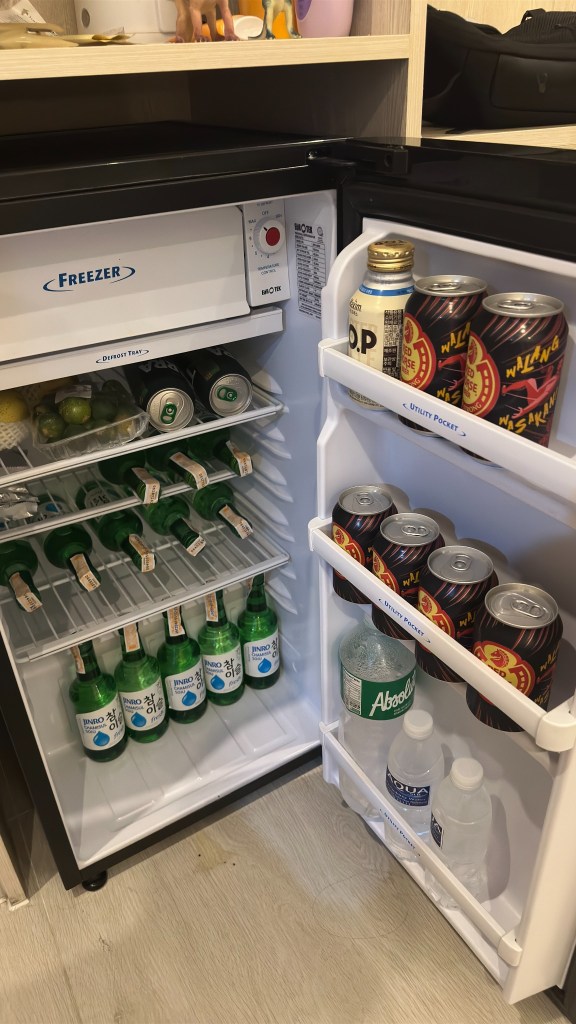
At one of our staff get-togethers in the Philippines, we were having drinks together when one employee suddenly told me they were done.
They were not coming to work anymore.
They had been drinking, so at first I wondered whether it was just something said in the moment. It wasn’t. They stopped showing up.
About two days later, they contacted me and asked if they could come back.
I said no.
By that point, my idea of what made someone a good employee had already begun to change.
Punctuality Wasn’t My First Hiring Test
When I first started doing business in the Philippines, I did not think, Can this person show up on time? before anything else.
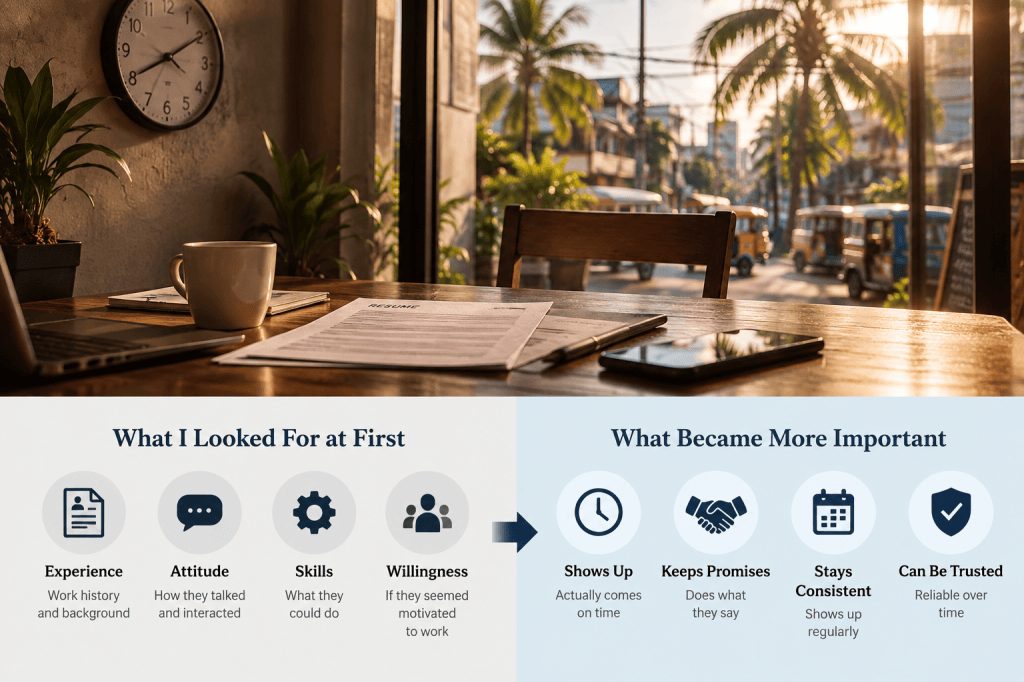
I looked at the things most people would probably look at: previous experience, attitude, how someone communicated, what they could do, and whether they seemed willing to work.
Time mattered, of course. It just wasn’t the first thing on my list.
That changed after experience.
I had interviews and work arrangements where people were late, changed plans, or simply did not show up when we had agreed to meet. It did not happen with everyone, but it happened often enough that I started paying attention to something much more basic than a résumé.
Will this person actually be there when they said they would?
Eventually, showing up when agreed—on time—became my first hiring test.
Being Friendly and Being Reliable Are Different Things
One thing I learned while doing business there was that getting along with someone personally and being able to rely on them at work are two different questions.
I could eat with employees, have drinks with them, joke around, and genuinely like them as people. That did not automatically mean I could build a work schedule around them.
That distinction sounds obvious when written down. It felt less obvious when you were actually living it.
I had already spent a lot of time in the Philippines before I started doing business there, and some of the people around me became important parts of my life. I wrote about that side of the experience in I Met Them as a Tourist. Later, They Helped Me Build a Life in the Philippines.
But friendship, warmth, and everyday relationships did not remove the practical problem of running a business. At some point, somebody still had to open the door, prepare for work, and be there when expected.
The Employee Who Quit While Drinking
The staff get-together I mentioned at the beginning stayed in my memory because it compressed the problem into one evening.
An employee, already drunk, told me they would not come to work anymore. Then they actually stopped coming.
Roughly two days later, they asked if they could return.
I did not take them back.
It was not because I expected employees to be perfect. People make mistakes. I make mistakes too.
The problem was that once I could no longer trust a basic commitment like I will be there tomorrow, everything else became harder to manage.
Skills can improve. Experience can be taught. A new employee can learn a system.
But if I could not predict whether someone would actually show up, those other qualities became much less useful.
The Reliable People Became Much Easier to See
The experience did not make me think everyone in the Philippines was unreliable. In fact, it made the opposite examples stand out much more clearly.
One employee regularly arrived 30 minutes to an hour early. Instead of waiting around, they would start preparing and getting things ready.
I did not have to wonder whether they were coming. I did not have to send messages asking where they were. Their reliability became visible through repetition.
That kind of person became extremely valuable to me.
Not because arriving an hour early should be a universal rule—it shouldn’t—but because they consistently did what they said they would do.
My Definition of a Good Employee Changed
At first, I paid more attention to experience, impressions, conversation, and ability.
Later, my order changed.
- Do they show up when we agreed?
- Do they keep their promises?
- Are they consistent?
- Can I trust what they tell me?
Once those questions had good answers, then I could think more seriously about skill and experience.
I did not go to the Philippines thinking that showing up on time would become my first hiring test.
It became that way after experience.
This Isn’t a Simple Korea-vs.-Philippines Story
I want to be careful with this story because it would be easy to turn a few personal experiences into a lazy national stereotype.
There are unreliable people in Korea. There are extremely reliable people in the Philippines. I met both kinds of people while doing business there.
So my point is not that one country’s workers are better than another country’s workers.
The more interesting change happened to me.
Living and doing business abroad forced me to notice which assumptions I had carried with me, which habits actually mattered when managing people, and which qualities I had previously taken for granted.
By the end, reliability mattered to me before almost everything else.
The biggest thing that changed wasn’t the employees. It was my definition of a good employee.
Have you ever worked or run a business in another country and found that your standards changed? Or is there something about Korea or the Philippines you want to ask about? Leave a comment below. If I know the answer, I’ll be happy to help.


Leave a comment