
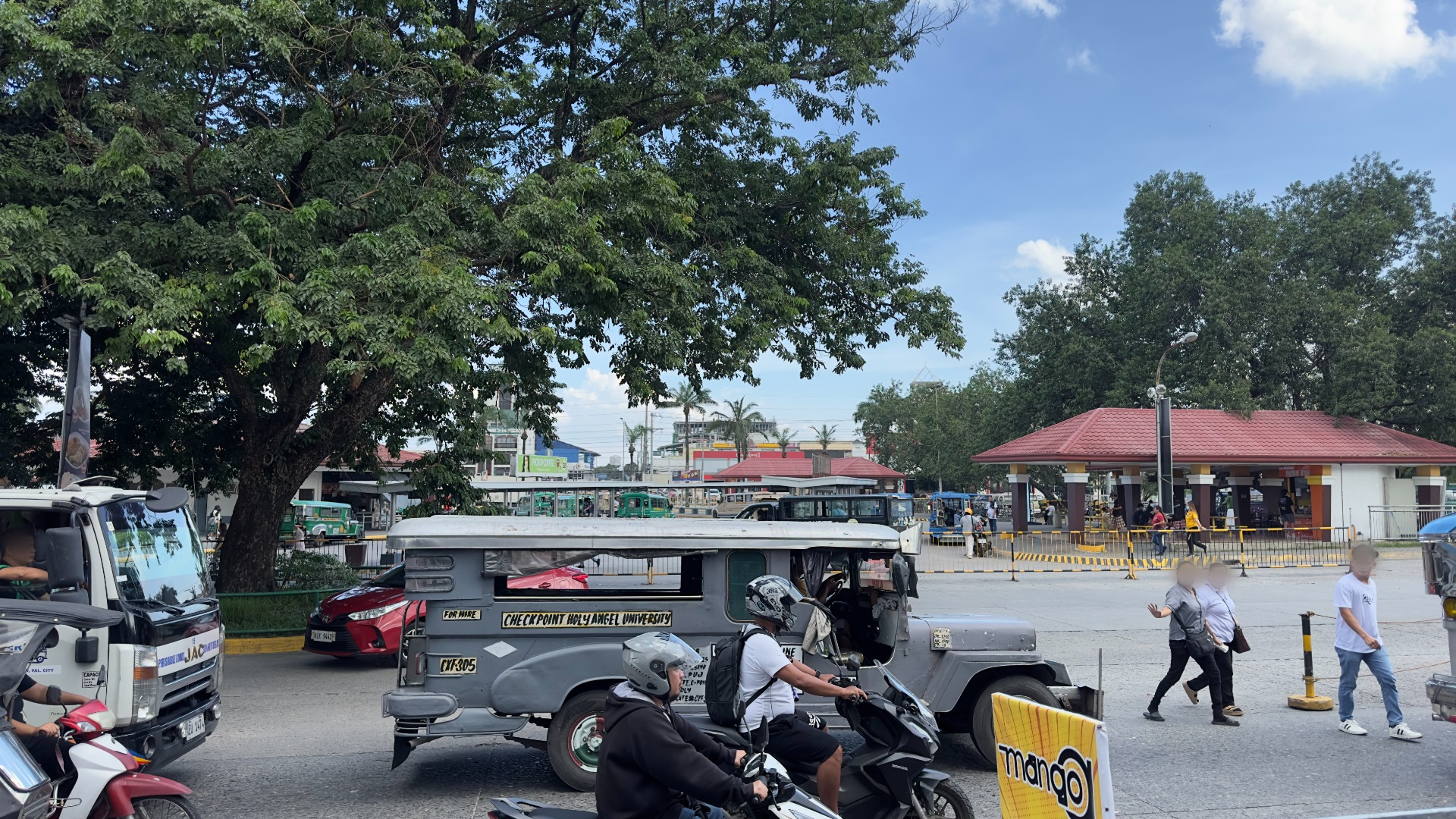
Philippines cost of living, Part 1 of 3 — wages and purchasing power.
For approximate Korean-won conversions, I use the rule of thumb I used at the time: ₱1 ≈ ₩25. This is not the current exchange rate.
During job interviews at my business in Angeles City, the Philippines, I used to ask a question that may have sounded unusual: How many jeepney rides will it take you to get to work, and how many times will you have to transfer?
I was thinking not just about arriving on time. I was thinking about the money a worker would spend getting to work every day.
The base daily wage I paid at the time was about ₱515. A ₱65 meal at a carinderia, a small local eatery, would take roughly 13% of that wage. A round-trip commute would come on top.
To someone earning in Korea, both figures might look remarkably cheap. But did they feel cheap to the person earning ₱515 a day?
I lived in Angeles City and ran a business there several years ago. Hiring employees and paying wages changed the way I thought about everyday prices. Something can have a low price without being easy for local workers to afford.
The amounts below describe my experiences at that time, not a current nationwide price survey.
1. Cheap Jeepney Fares Don’t Make Commuting Cheap
A jeepney is one of the Philippines’ best-known forms of public transport. For a visitor, the fare can seem tiny compared with a ride booked through Grab.
A worker makes that trip repeatedly, however. One jeepney ride and three jeepney rides are not the same commute. Each transfer can add expense, uncertainty and time.
That was why I asked about the route in job interviews. I wanted to understand how much time and money someone would have to commit just to show up for work. Taking Grab every day was hardly a practical alternative at the wage levels I was dealing with.
For a tourist, transport is part of a holiday budget. For an employee, it is a cost of having a job.
I wrote separately about how working with employees in the Philippines changed my hiring decisions: How Doing Business in the Philippines Changed the Way I Hired People. Here, I want to look at the wages themselves.
2. What Does a ₱65 Meal Mean on a ₱515 Daily Wage?
At the business I operated, employees were paid on the 15th and 30th of each month. The base daily wage was about ₱515, with overtime and night-shift pay handled separately. Our manager took care of the actual payroll calculations.
At the conversion rate I used then, ₱515 was roughly ₩12,875. But that conversion doesn’t tell you what the wage could buy.
At local carinderias, I remember meals costing around ₱65–80.
| Item | Price at the time | Share of daily base wage |
|---|---|---|
| Daily base wage | ₱515 | 100% |
| One meal | ₱65 | about 12.6% |
| One meal | ₱80 | about 15.5% |
₱65 was about ₩1,625 by that old rule of thumb. For someone visiting from Korea, that is a very cheap lunch. For a worker earning ₱515 a day, it uses more than one-eighth of a day’s base wage.
I saw employees choosing cheaper side dishes and spending less where they could. Saving a few dozen pesos could make a practical difference.
Of course, not everyone buys three meals outside the home. Nor do these percentages account for overtime pay, other household income or the number of days actually worked. This is a simple comparison, not a household income study.
A price tag doesn’t carry the same weight for everyone. Income changes what ‘affordable’ means.
3. Expenses That Can Hurt More Than a Daily Meal
One surprise for me was the price of appliances. When food and public transport are cheap, it is tempting to assume that refrigerators and washing machines must also be far cheaper than in Korea. That was not always what I found.
I remember looking for a tall freezer for the business. I cannot recall the model or capacity, but I remember a price above ₱20,000—roughly 39 days of that ₱515 base wage, before spending a peso on living costs.
I also saw people buying appliances in installments. A single essential household purchase could be a major financial commitment.
An unexpected medical expense could be even more difficult. I once visited the emergency department at AUF Medical Center in Angeles City early in the morning. After several tests, I remember paying about ₱7,000.
That was roughly 13.6 days of the base wage I paid, although it was the cost of my particular visit, not an average emergency-room bill.
People around me also sometimes asked for help paying PhilHealth contributions. The Philippines has public health insurance, and in formal employment contributions are generally shared between employer and employee. Membership does not mean every medical service is free.
For official explanations, see PhilHealth’s formal-sector registration guide and its benefits information.
These experiences reminded me that a household budget is not just food and transport. A freezer, a washing machine or a sudden hospital visit can change the calculation overnight.
4. Is the Daily Minimum Wage Still ₱515 in 2026?
No. ₱515 is what I paid years ago, not the legal minimum wage in 2026. The Philippines sets minimum wages by region and sector.
As of November 2026, the following daily rates apply in Central Luzon, which includes Pampanga and Angeles City, under wage order RBIII-26. The second increase took effect on April 16, 2026.
| Sector | Daily minimum wage |
|---|---|
| Non-agricultural | ₱600 |
| Retail and service | ₱590 |
| Agricultural | ₱570 |
Workplace classification and any applicable exceptions can affect the rate. The official source is the National Wages and Productivity Commission, Region III.
Wages have risen since the time of my experience. So have many expenses. A higher nominal daily wage alone cannot show how much purchasing power has improved.
5. What Can Be Left After Basic Expenses?
Paying employees made me think about the difference between earning money and having money left over.
Food and transportation costs recur every working day. Rent and other bills arrive as well. Sometimes a family needs to replace an appliance; sometimes a medical bill appears unexpectedly.
How much can someone really save? I cannot use the people I employed to describe every Filipino household. Income, location, work, family size and financial arrangements all vary.
Still, I don’t think difficulty saving should automatically be blamed on poor spending habits. When essential costs take up a large share of income, budgeting more carefully has its limits.
6. Cheap for Whom?
There is plenty in the Philippines that someone earning Korean wages can buy for relatively little money. Eat at a carinderia and take jeepneys, and everyday spending may be modest by Korean standards.
But the same prices feel different when you are earning a local wage.
I learned that distinction not by comparing vacation expenses, but by actually paying employees and thinking about their daily commute.
When I asked a job applicant how many jeepneys they needed to take, I was really asking about the cost of their day.
So the question isn’t simply whether the Philippines is cheap or expensive. It is whose income you are using and how that person lives.
Next: Groceries and Eating Like a Local
My own food-shopping habits changed too. I started at SM Hypermarket in Clark, then began buying groceries at Pampang Public Market after realizing how expensive some vegetables could be.
Local carinderias could be inexpensive, while Korean restaurants operated in a different price range. In Part 2, I compare those everyday food choices. In Part 3, I’ll look at the ₱10,000 condo and ₱25,000 hotel-style room I lived in—and why electricity changed the real cost of housing.
Leave a Reply