
The first time I went to the Philippines, I took a van from Manila to Clark. On the way, I stopped at a Burger King at a highway rest stop.
And before I even thought about ordering a burger, I noticed something unusual.
There was an armed security guard at the entrance.
A guard with a gun. At Burger King.
That’s not something I was used to seeing back in Korea.
Then I walked inside and had another question.
Why are there so many employees?
It looked like the kind of place that might have three people working in Korea. Here, I could see more than ten.
I remember those two things more clearly than whatever I ate.
Little did I know I’d keep noticing similar differences when I eventually lived in the Philippines.
More Staff Doesn’t Mean Faster Service
Whenever I ate at Korean restaurants in the Philippines, the number of employees often caught my eye.
Compared with Korean restaurants of a similar size back home, there seemed to be three or four times as many people working. That’s just my impression, not an actual headcount.
You might think all those extra hands would make everything run faster.
Not necessarily.
At the places I visited, the pace was generally relaxed. Sometimes I’d ask for something, and the request would get forgotten.
At first, I found that frustrating.
In Korea, I was used to watching a few restaurant employees juggle orders, carry food, and handle payments at a brisk pace.
But the restaurants I visited in the Philippines had something else going for them.
The staff were genuinely friendly. And they smiled. A lot.
Korean restaurant workers can be just as kind. In the places I’ve visited in Korea, though, that kindness often came through in how quickly they got things done, rather than in constant smiles.
It took me a while to get used to that combination: a more relaxed pace and a very warm welcome.
They Grilled the Meat. I Kept Tipping.
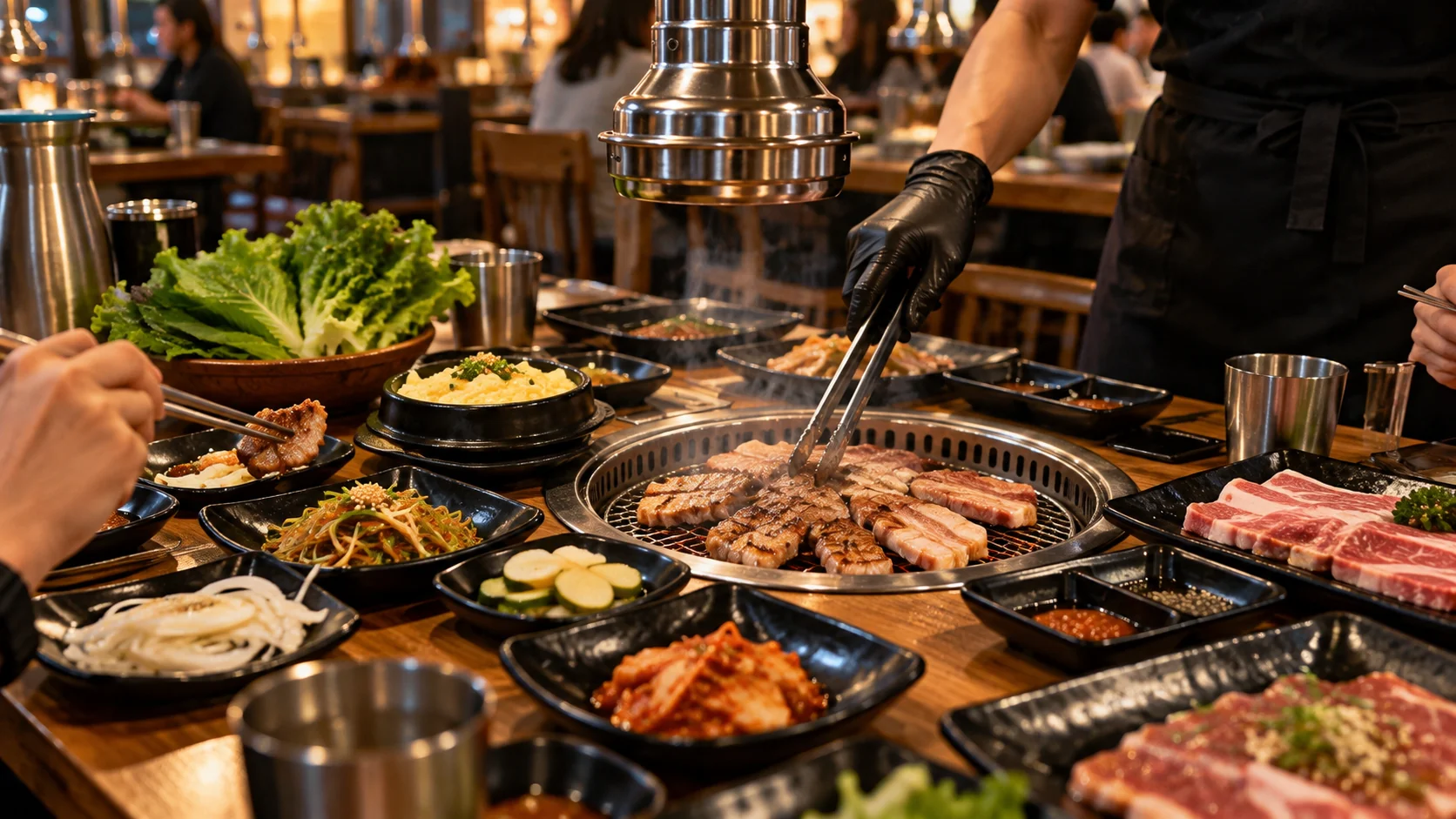
At some Korean BBQ restaurants I visited in the Philippines, having a staff member grill the meat at the table was the default.
I could grill it myself if I wanted. I could even ask for the meat to be fully cooked and brought to the table ready to eat.
Of course, there are plenty of BBQ restaurants in Korea where the staff cook for you, too. That part wasn’t completely new.
The tipping was different for me.
When a staff member grilled the meat, I’d give them a tip.
When I ordered another bottle of soju (소주, Korean distilled liquor), I’d sometimes give another.
And when I finished the meal, I might leave the change behind.
Quite a few tips for one meal, now that I think about it.
So did the employees suddenly become even friendlier after I tipped them?
Not really.
They were already friendly. They were already smiling.
I wasn’t paying to unlock a better version of the service. I was just saying thank you in my own way.
That’s how I chose to dine there, by the way. It doesn’t mean you have to tip repeatedly at Korean restaurants in the Philippines.
At the restaurants I went to, I also paid the bill without leaving my seat. In Korea, I’m much more used to walking over to the counter.
Same Korean BBQ. Same soju. A surprisingly different rhythm to the evening.
If you’re curious about the other side of that comparison, I’ve written separately about when people actually tip in Korea.
Then I Hired Employees Myself
When I first encountered these differences, I didn’t really understand them.
Later, I lived in the Philippines and hired local employees. Working alongside them gave me a different perspective.
I understand that juggling several tasks at once can be difficult. What sometimes challenged me more was seeing how long it could take someone to get comfortable with a single job I’d taught them.
But that wasn’t everyone.
I also worked with people who picked things up quickly and did their jobs very well.
People were different. Just as you’d expect.
Working with employees myself helped me look at the restaurants I’d visited with a little more understanding. It didn’t give me a definitive explanation for why any particular restaurant employed so many people.
I’ve talked about another side of that experience in my story about hiring people in the Philippines.
I Still Prefer the Korean Way
So, which style of restaurant service do I actually prefer?
Korea.
Well, I’m Korean. What did you expect?
I still like the fast, familiar service I’m used to.
But living in the Philippines changed something. These days, when a restaurant takes its time, I don’t get frustrated the way I used to.
It doesn’t mean I now prefer the slower pace. I’ve just learned to understand it better.
And one thing has stuck with me: how often the people serving me smiled.
I still prefer Korean-style service. I just understand the Philippines’ more relaxed pace now.
What matters more to you in a restaurant—quick, efficient service or a warm smile, even if things move a little more slowly?
Have a question about Korean restaurants or dining in Korea? Leave a comment. If I know the answer, I’ll be happy to help.
Leave a Reply