
Korean Language
-
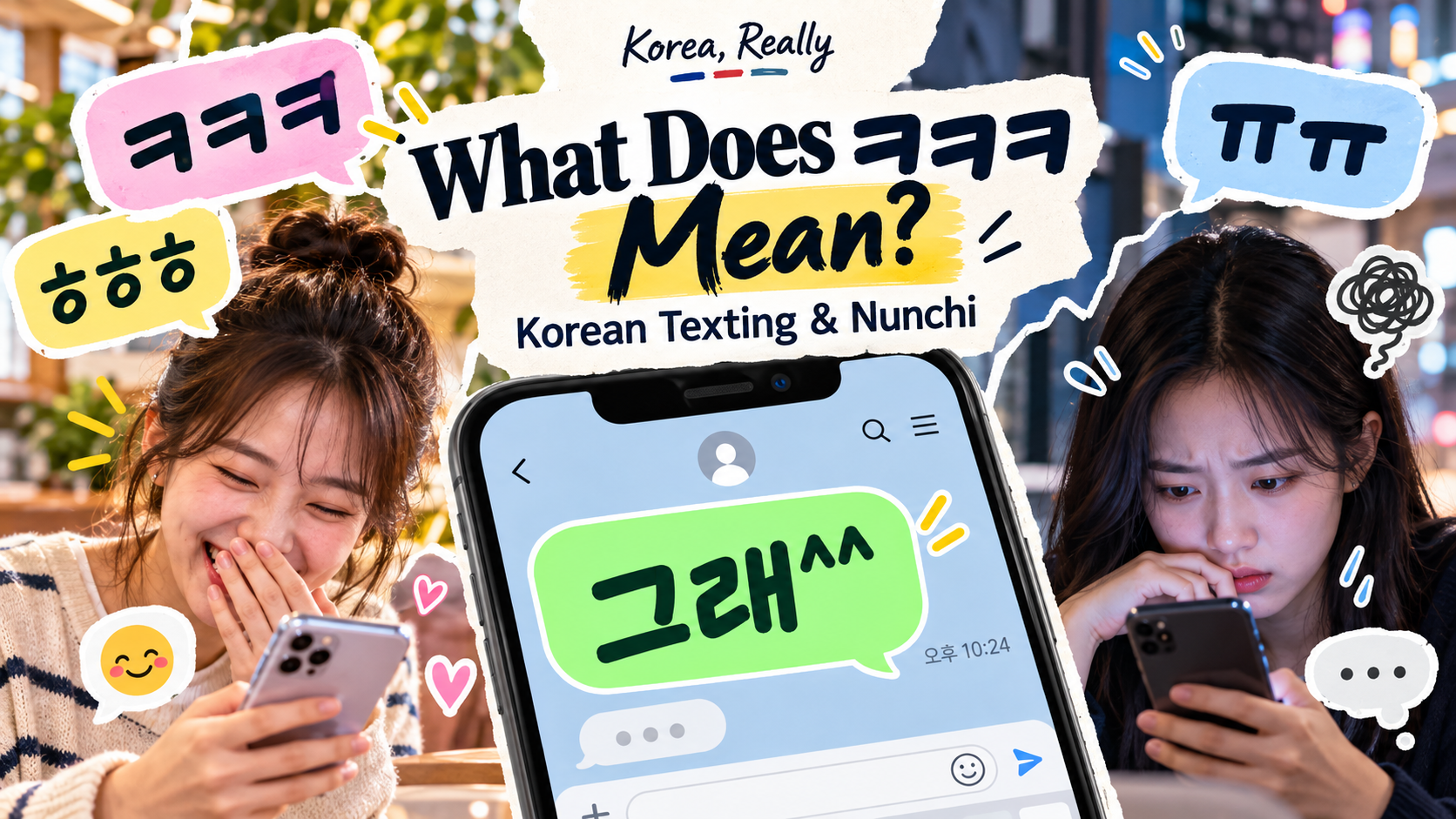
What does ㅋㅋㅋ mean in Korean texting? Learn the difference between ㅋㅋㅋ and ㅎㅎㅎ, how ㅠㅠ and ^^ can change a message, and why nunchi matters.
-

Discover seven everyday Korean loanwords, from manttang and alba to gomu and saida, with meanings, origins and how Koreans actually use them.
-

G-DRAGON’s “BULLSHIT” translates gaesori (개소리) well, but the English title loses Korean memes, puns, rhymes, and the DOG-to-dok wordplay Korean listeners can hear.
-

Why do Koreans ask your age so quickly? A Korean local explains how age shapes speech, titles, friendship, and social roles—and where the hierarchy can go too far.
-

Hangul is easy to start reading. Korean is harder because people, situations, context, nuance, slang, and dialect all change how the language actually works.
-

What does 2NE1’s “I Am the Best” really mean in Korean? A Korean explains 잘 나가다, key slang in the lyrics, and why the song’s swagger worked.
-
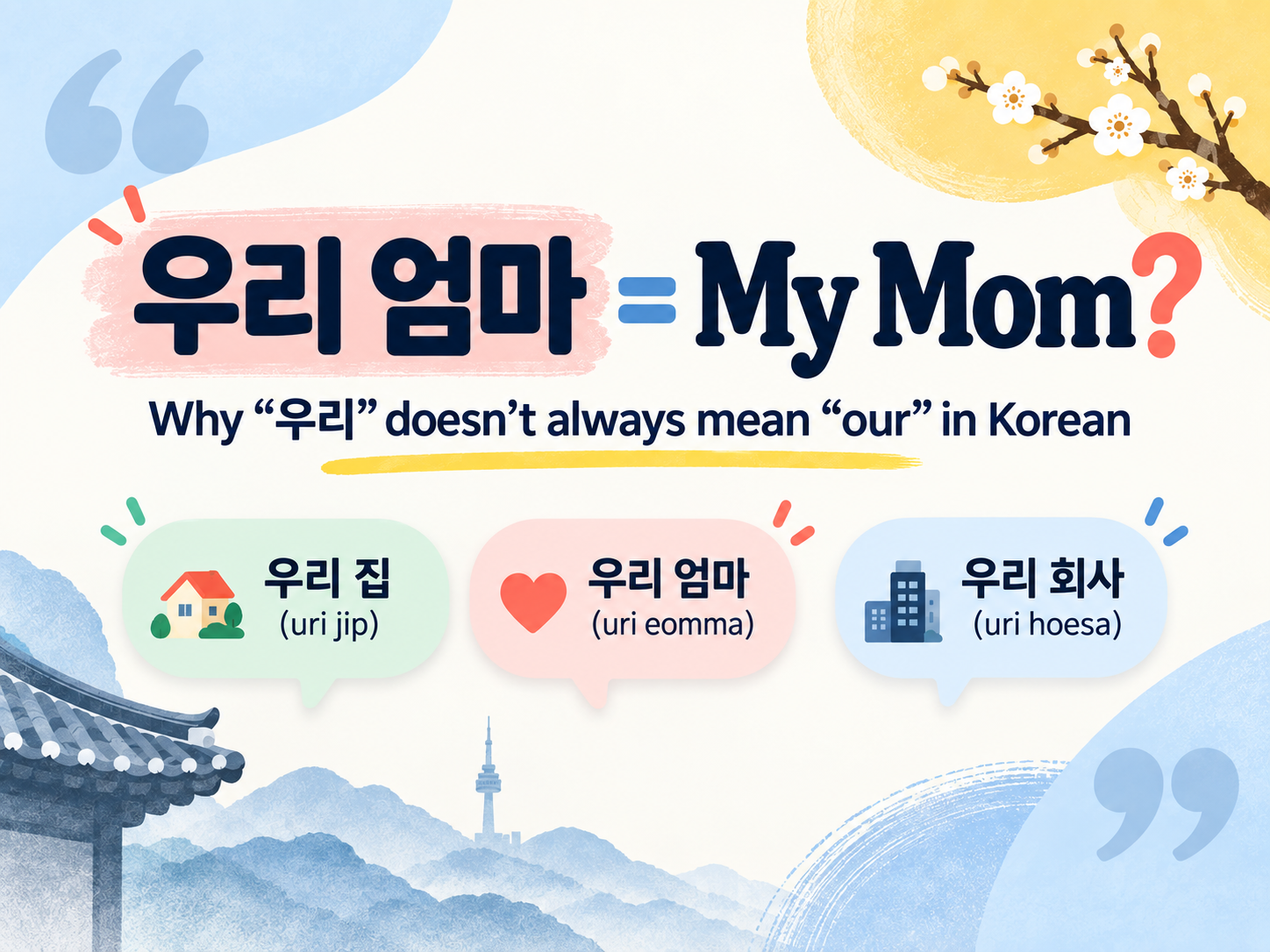
Why does 우리 엄마 mean “my mom”? A Korean explains how uri works in real life — from 우리 집 and 너희 엄마 to the famous “우리 애” line in Misaeng.
-

Why do Koreans give sticky candy before exams, avoid seaweed soup, or hand someone a fork for good luck? Some Korean superstitions make much more sense once you understand the words behind them.
-

What does G-DRAGON’s “BLACK” mean? Explore its color imagery, Korean wordplay, and the love, resentment, and regret within a damaged relationship.
-

Han (한) is often translated as sadness, grief, or resentment, but none of those words fully explain it. A Korean perspective on loss, eogulham, determination, revenge, and what it means to finally “release” han.